
How Often Should You Replace Your Tires, Even If They Look Fine?
Many drivers assume tires only need replacing once the tread looks worn. In reality, tire replacement depends on more than just appearance. Rubber compounds break down over time, internal structures weaken, and performance can decline long before tires look unsafe. Understanding how often to replace tires helps protect your safety, improve handling, and avoid unexpected blowouts.
Below, we break down tire lifespan, age considerations, mileage guidelines, and the hidden risks of driving on tires that appear fine but may no longer be reliable.
How Long Do Tires Typically Last?
Most modern passenger vehicle tires are designed to last between 40,000 and 70,000 miles depending on the tire type, brand, and driving conditions. However, mileage alone does not determine how often you should replace tires.
Tires also have a time based lifespan. Even if tread depth remains within safe limits, rubber degradation begins as soon as the tire is manufactured. For most vehicles, tires should be replaced every six to ten years regardless of mileage. This means a car driven infrequently may still need new tires sooner than expected.
Mileage Based Tire Replacement Guidelines
Mileage is still an important indicator when deciding when to replace tires. General guidelines include:
- All season tires often last 50,000 to 70,000 miles
- Performance tires may last 30,000 to 45,000 miles
- Light truck and SUV tires typically fall between 40,000 and 60,000 miles
These numbers assume proper tire rotations, alignments, and inflation. Aggressive driving, frequent short trips, heavy loads, or poor road conditions can significantly shorten tire lifespan.
If your tires are approaching the upper end of their mileage rating, replacement should be planned even if they look visually acceptable.
Why Tire Age Matters Even If Tread Looks Good
Tires are made from rubber compounds that naturally harden and dry out over time. Exposure to heat, sunlight, oxygen, and ozone accelerates this process. As rubber ages, it loses flexibility and grip, increasing the risk of cracking, reduced traction, and sudden failure.
This is why tire age is just as important as tread depth when determining how often to replace tires. A tire with adequate tread but weakened rubber may not perform safely during braking, cornering, or wet conditions.
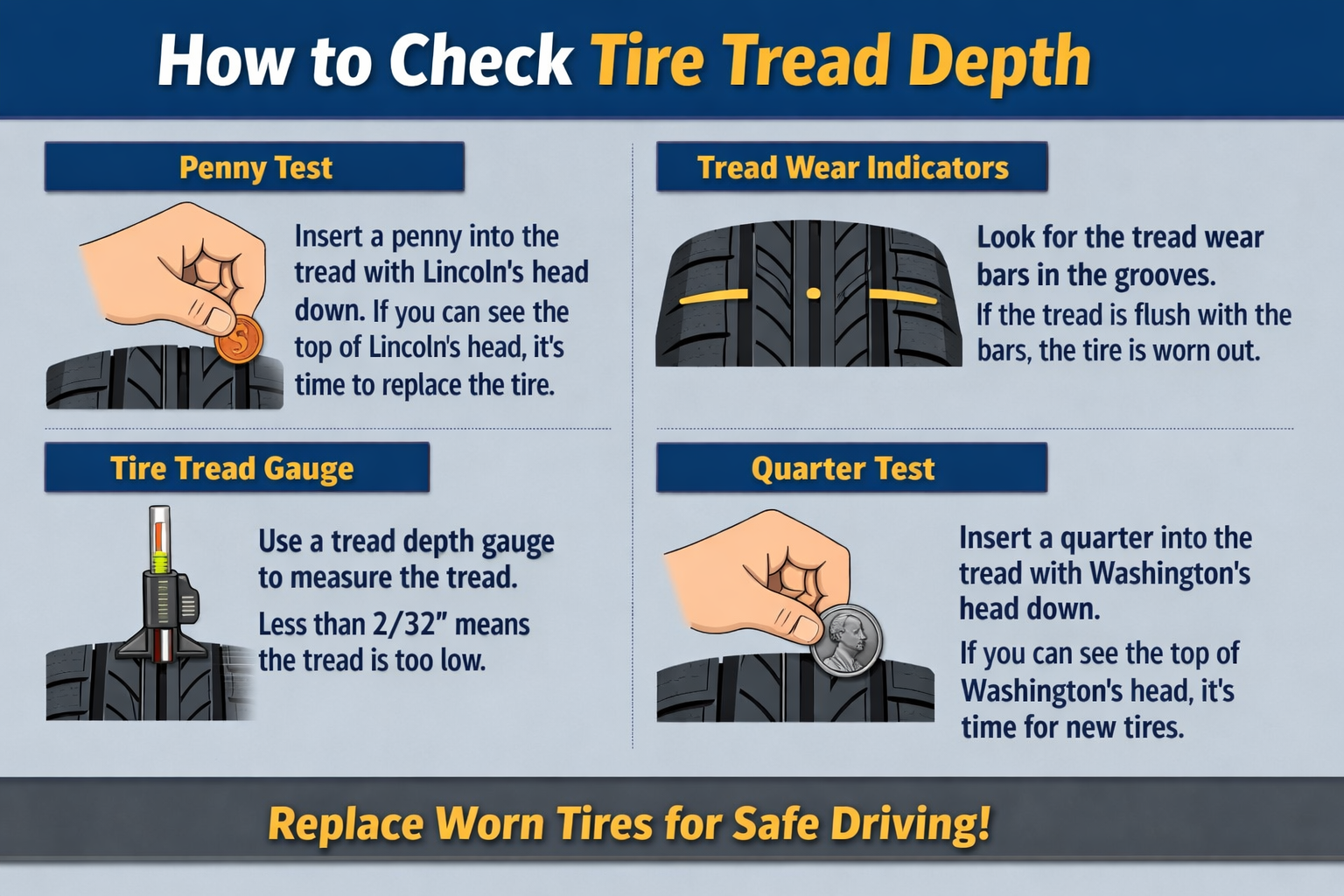
Signs You Should Replace Tires Beyond Tread Depth
Tread depth is only one piece of the tire replacement puzzle. Other signs that indicate it may be time to replace tires include:
- Visible cracking on sidewalls or between tread blocks
- Bulges or bubbles indicating internal damage
- Excessive vibration while driving
- Uneven wear patterns that do not improve after alignment
- Tires that are more than six years old based on the DOT code
If any of these symptoms are present, tire replacement is recommended even if tread depth appears sufficient. Visit Auto Surgeon to
shop for new tires in Lansing, MI or fix a flat tire before replacing. Our technicians will advise on what is the best option for your vehicle.
Risks of Driving on Old or Aged Tires
Driving on aged tires increases the risk of blowouts, poor braking performance, and reduced traction, especially in wet conditions. As rubber hardens, tires lose their ability to grip the road effectively.
Older tires are also more susceptible to sudden failure at highway speeds, where heat buildup and internal stress are highest. This can lead to loss of control, vehicle damage, or accidents that could have been prevented with timely tire replacement.
Replacing tires before failure is far safer and more cost effective than dealing with emergency roadside situations.
How Regular Inspections Help Determine When to Replace Tires
Routine tire inspections are one of the best ways to extend tire life and determine the right replacement timing. During inspections, technicians check tread depth, tire age, wear patterns, air pressure, and signs of internal damage.
These inspections can reveal problems early, allowing you to plan tire replacement instead of reacting to a sudden issue. Regular rotations and alignments also help tires wear evenly, maximizing their usable lifespan while maintaining safety.
Choosing the Right Time to Replace Tires at a Repair Shop
Even if your tires look fine, they may not be safe to keep using. Tire replacement depends on a combination of age, mileage, wear patterns, and driving conditions. In most cases, tires should be replaced every six to ten years or once they reach their mileage limit, whichever comes first.
Understanding how often to replace tires helps protect your vehicle, your passengers, and everyone else on the road. When in doubt, visiting a professional auto repair shop is the best way to ensure your tires are still safe or determine when replacement is the smarter choice.


