10 Signs You Need to Buy New Tires
Your tires play a bigger role in your safety than almost any other part of your vehicle. They affect braking distance, handling, fuel efficiency, and how well your car performs in rain, snow, and ice. Because tires wear gradually, many drivers don’t realize they need new ones until performance has already dropped.
If you’re unsure whether your tires still have life left or it’s time to replace them, the warning signs below can help you make a confident, informed decision before safety becomes a concern.
10 Warning Signs Your Tires Need to Be Replaced
1. Tread Depth Is Below Safe Limits
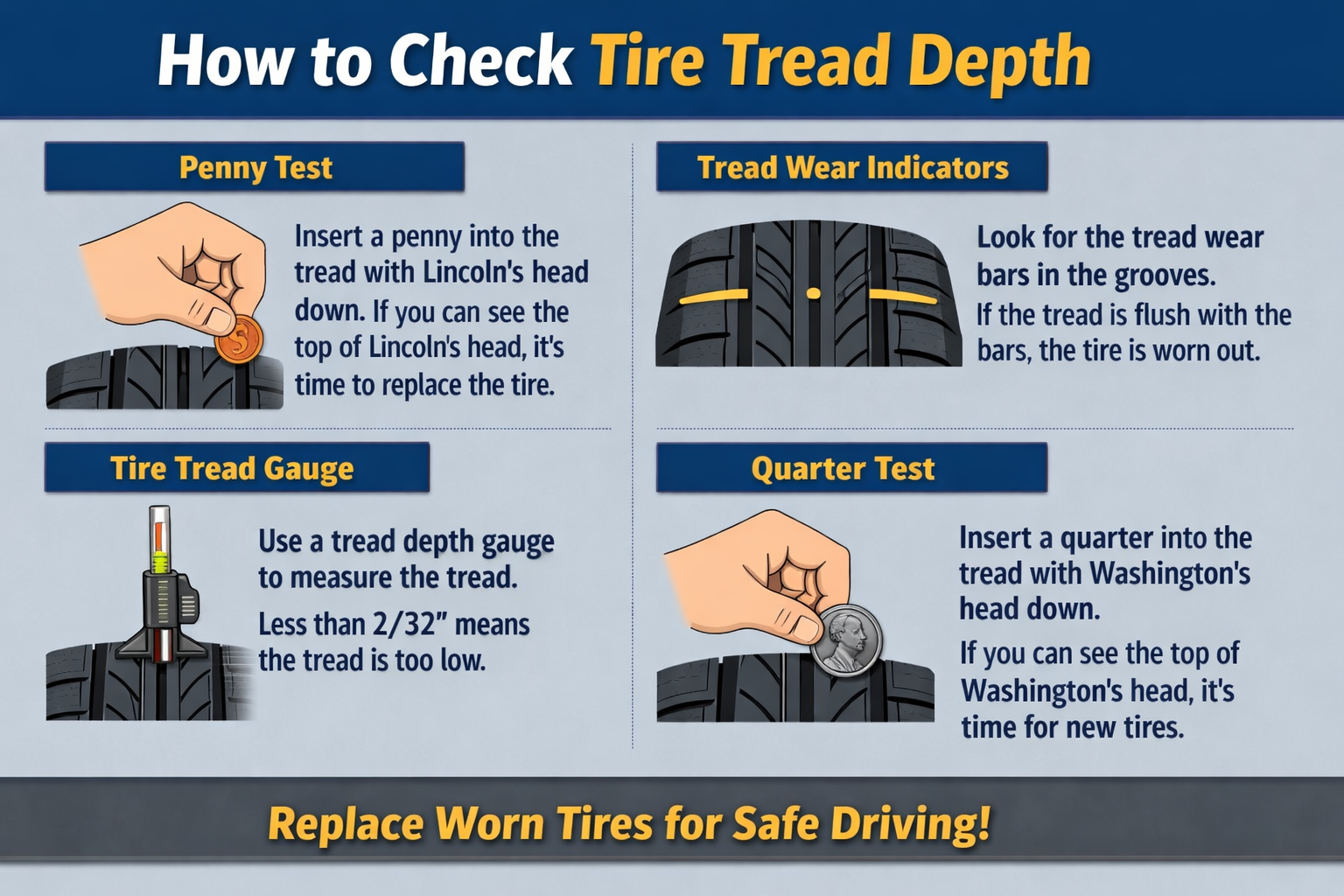
Tread depth is one of the most important indicators of tire condition. When tread becomes too shallow, your tires lose their ability to grip the road, especially in wet or snowy conditions. If the tread is worn down to 2/32 of an inch or less, replacement is necessary.
2. You See Cracks in the Sidewall
Cracking or dry rot along the sidewall is a sign that the rubber is aging and losing flexibility. These cracks can eventually lead to air leaks or sudden tire failure and should never be ignored.
3. Tires Are More Than 6 Years Old
Even if tread looks acceptable, tire rubber degrades over time. Most manufacturers recommend replacing tires around the six-year mark due to aging rubber compounds that reduce safety and reliability.
4. Uneven Tread Wear
If one side of the tire is more worn than the other, or you notice patchy wear patterns, it often points to alignment, suspension, or inflation issues. Once uneven wear becomes severe, replacement is usually the safest option.
5. Frequent Loss of Air Pressure
Tires that constantly need air may have internal damage, bead leaks, or aging rubber that no longer seals properly. Repeated air loss is a strong sign the tire is nearing the end of its usable life.
6. Vibration While Driving
While vibrations can come from several sources, worn or damaged tires are a common cause. If balancing doesn’t resolve the issue, internal tire damage may be present.
7. Longer Stopping Distances
If your vehicle takes longer to stop, especially in rain or snow, worn tires may be the cause. Reduced tread depth limits your tires’ ability to channel water away from the contact patch.
8. Bulges or Blisters
Bulges on the tire surface indicate internal structural damage, often from hitting potholes or road debris. These tires are at high risk of sudden failure and should be replaced immediately.
9. Poor Traction in Wet or Winter Conditions
If your vehicle feels unstable in rain or snow, even at moderate speeds, your tires may no longer provide sufficient grip. This is especially critical for Michigan drivers facing seasonal weather changes.
10. Tires Have Been Repaired Multiple Times
A tire that has already been patched several times is more likely to fail. Multiple repairs weaken the structure and reduce overall reliability.
Why the Decision Matters for Safety and Cost
Replacing tires at the right time protects more than just your vehicle. It protects your safety and helps avoid costly breakdowns or accidents. Worn tires increase braking distance, reduce steering control, and make hydroplaning more likely.
From a financial standpoint, delaying tire replacement often costs more in the long run. Tires that are too worn can cause uneven wear on suspension components, reduce fuel efficiency, and lead to additional repairs. Investing in new tires before failure occurs often saves money and stress over time.
When a Tire Can Be Safely Repaired
Not all tire damage means replacement is required. In some cases, a professional repair is safe and cost-effective.
A tire may be repairable if:
- The puncture is in the tread area
- The hole is small (typically from a nail or screw)
- There is no sidewall damage
- The tire has not been driven flat
- The tire has not already been repaired multiple times
However, sidewall damage, large punctures, or internal structural issues usually mean replacement is the safest choice. A professional inspection is the best way to determine whether repair or replacement is appropriate.
Schedule a Tire Inspection at Auto Surgeon
If you’re noticing any of these warning signs or simply want expert advice, the team at Auto Surgeon is here to help. We’ll inspect your tires, explain your options clearly, and help you choose the safest and most cost-effective solution for your vehicle.
Call us, visit our Lansing location, or
book an online appointment today to keep your vehicle safe, reliable, and ready for the road.


