
How Tire Tread Depth Affects Safety, Fuel Economy, and Handling
Tires are the only part of your vehicle that make direct contact with the road, yet they are often overlooked until a problem occurs. One of the most critical factors in tire performance is tread depth. Proper tire tread depth safety is not just about passing inspections. It directly impacts how safely your vehicle stops, how efficiently it uses fuel, and how confidently it handles everyday driving conditions.
Understanding how tread depth works can help you make smarter maintenance decisions and avoid unnecessary risks on the road.
What Is Tire Tread Depth and Why It Matters
Tire tread depth refers to the vertical measurement between the top of the tread rubber and the deepest grooves of the tire. These grooves are designed to channel water away from the tire, maintain traction, and keep the vehicle stable during acceleration, braking, and turning.
As tires wear down, the tread becomes shallower. When tread depth drops too low, tires lose their ability to grip the road effectively. This is why tire tread depth safety is one of the most important indicators of whether your tires are still roadworthy.
How to Measure Tire Tread Depth
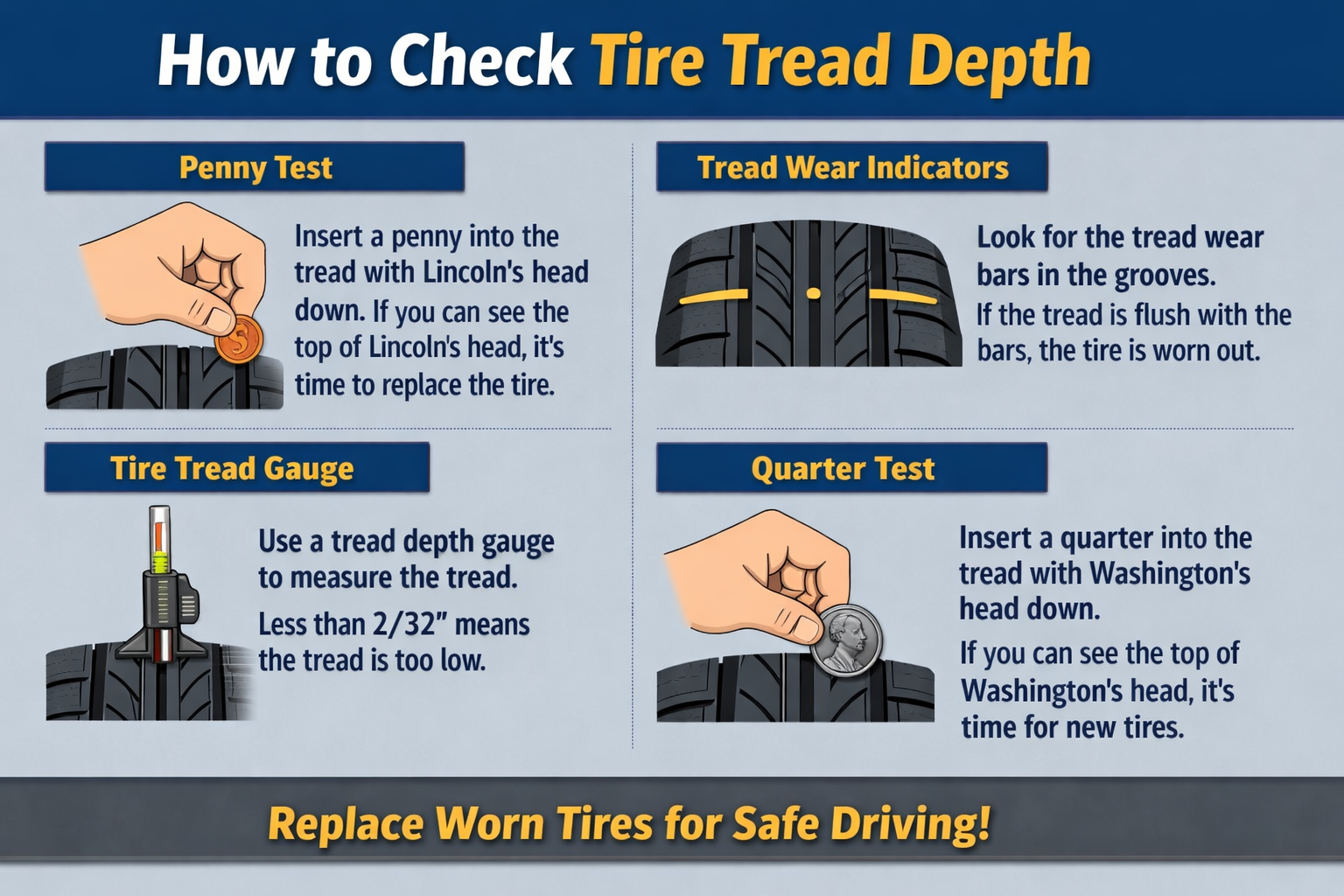
Checking tire tread depth is simple and can be done at home or during a routine service visit. One common method is using a tread depth gauge, which provides an accurate measurement in seconds.
Another quick method is the penny test. Insert a penny into the tread groove with Lincoln’s head facing down. If you can see the top of his head, the tread depth is below 2/32 of an inch and the tire should be replaced. While this method is not as precise, it offers a basic safety check.
For the most reliable results, professional inspections during tire service visits are recommended.
How Tire Tread Depth Impacts Vehicle Safety
Adequate tread depth is essential for safe braking and traction. Tires with deeper tread can grip the road more effectively, especially during sudden stops or emergency maneuvers. When tread becomes worn, stopping distances increase significantly.
On dry pavement, worn tires already reduce braking performance. On wet roads, the risk multiplies. Shallow tread cannot push water out from under the tire quickly enough, which increases the likelihood of hydroplaning. This loss of contact between the tire and road surface makes steering and braking unpredictable.
Maintaining proper tire tread depth safety helps reduce the chance of skidding, sliding, and losing control during everyday driving.
Why is Tire Tread Depth Important in Wet and Slippery Conditions
Wet roads are where tread depth matters most. Tire grooves are engineered to move water away from the contact patch, allowing rubber to stay in contact with the pavement. When tread depth is low, water builds up beneath the tire instead of being dispersed.
This leads to hydroplaning, where the tire rides on a thin layer of water rather than gripping the road. Even at moderate speeds, worn tires can lose traction in rain, making it difficult to brake or steer.
In snowy or slushy conditions, tread depth becomes even more critical. Deeper tread helps bite into snow and slush, improving traction and stability. Shallow tread significantly reduces winter driving safety, even on all season tires.
Legal Tread Depth Limits and Safety Recommendations
In most states, the legal minimum tread depth is 2/32 of an inch. At this level, tires are considered legally worn out and unsafe for continued use. However, waiting until tires reach the legal minimum is not recommended.
Many automotive professionals suggest replacing tires once tread depth reaches 4/32 of an inch, especially if you frequently drive in wet conditions. For winter driving, even more tread depth may be necessary to maintain traction.
Replacing tires before they reach the legal limit improves safety and helps avoid dangerous driving situations caused by worn tread.
When to Replace Tires Based on Tread Wear
Tires should be replaced when tread depth becomes unsafe, when wear is uneven, or when the tire shows signs of damage such as cracking or bulging. Uneven tread wear may indicate alignment or suspension issues that should be addressed alongside tire replacement.
Ignoring worn tires increases the risk of accidents, reduces fuel efficiency, and compromises handling. Replacing tires at the right time ensures your vehicle remains safe, efficient, and comfortable to drive.
Replace Your Tires at Auto Surgeon, Inc in Lansing, MI
Tire tread depth affects far more than just tire appearance. It plays a critical role in safety, fuel economy, and handling. Driving on worn tires increases stopping distances, reduces traction in wet conditions, and compromises vehicle control.
By regularly checking tread depth and addressing tire wear early, drivers can avoid unnecessary risks and costly repairs. Do not wait until worn tires become a safety risk. Contact Auto Surgeon, Inc today to schedule a tire inspection or replacement and drive with confidence on every trip.


